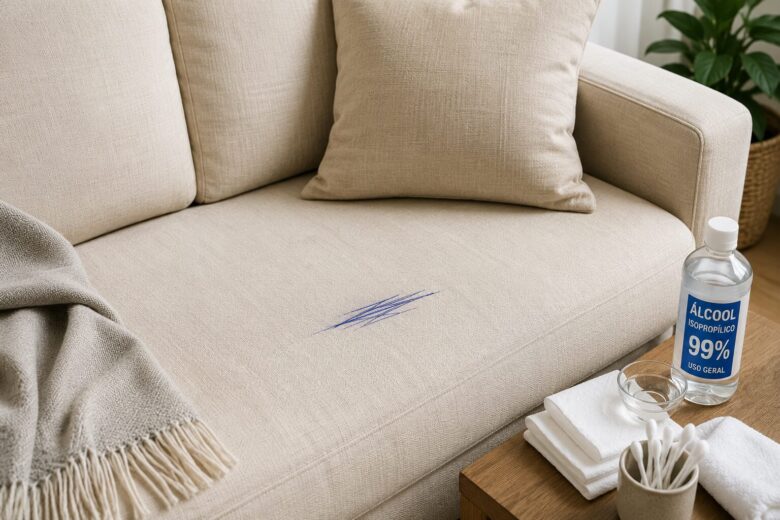
Few household accidents cause as much immediate panic as discovering a blue or black ballpoint pen mark across the light fabric of a linen sofa. As a premium natural textile with a open, highly absorbent weave, linen draws oil-based ink pigments straight into the heart of its fibers in a matter of seconds.
When attempting to fix the issue quickly, the most common instinct is grabbing a wet cloth with dish soap and scrubbing vigorously. However, aggressive friction causes two permanent types of damage: it spreads the diluted ink into a much larger halo stain and frays the delicate linen weave, causing permanent fuzzing, pilling, and color loss (frictional bleaching).
To extract the ink pigment without ruining the refined texture of your furniture, you must swap brute force for smart chemistry and proper movement. Discover below how to apply the controlled friction technique to remove ballpoint pen ink from linen upholstery safely.
Disclaimer: As an Amazon Associate, FixByMyself earns from qualifying purchases made through links in this post at no additional cost to you.
The Science Behind Ballpoint Pen Ink Stains
Removing the ink line without damaging your sofa requires understanding what ballpoint ink is made of and how it bonds to plant-based linen fibers.
Ballpoint pen ink is formulated with synthetic resins and dense, viscous oils designed to dry rapidly. Because it is a lipophilic ink (dissolving in fat and solvents while repelling water), plain water or standard soaps cannot break down the pigment binder.
The only way to release this resin from linen fibers is by applying a fast-evaporating solvent—such as high-purity (99%) isopropyl alcohol—paired with a compression transfer method known as controlled friction.
Step-by-Step Controlled Friction Method
Follow this precise sequence to pull ink out of the fabric without spreading the stain or altering the linen’s natural texture:
1. Perform a Colorfastness Test
Before applying any solvent to the main stain, place a single drop of isopropyl alcohol on an inconspicuous area of the sofa (such as the bottom back skirt or under a seat cushion). Press a clean white cloth against it for 30 seconds to ensure the original fabric dye does not bleed.
2. Set Up a Transfer Barrier
If your cushion cover is removable, place a folded layer of white paper towels inside the cover directly behind the stain. If the sofa has fixed upholstery, work carefully on the exterior surface while keeping liquid volume to a minimum.
3. Apply Solvent Without Oversaturating
Slightly dampen the tip of a cotton swab or the corner of a microfiber cloth with 99% isopropyl alcohol. Never pour solvent directly onto the sofa, as excess liquid will cause the dissolved ink to bleed outward into clean surrounding fabric.
4. The Controlled Friction Motion (Dabbing & Twisting)
Instead of rubbing back and forth, gently press the dampened cotton swab onto the ink line and execute a subtle rotating “twist” motion on its axis. The ink will begin dissolving and transferring from the linen onto the cotton. Rotate to a fresh, clean section of cotton frequently to avoid reapplying lifted ink back into the weave.
🛒 The Essential High-Evaporation Solvent for Fine Fabrics
To ensure the oil pigment dissolves instantly without leaving behind water rings or dark tide marks on natural linen, the key is using 99% high-purity isopropyl alcohol, which evaporates almost instantly without soaking internal cushion foam.
We highly recommend keeping 99% Pure Isopropyl Alcohol Technical Grade Solvents on Amazon in your home emergency kit. Unlike standard 70% rubbing alcohol (which contains 30% water and can leave water rings on delicate linen), the 99% pure formula dissolves ink resin in seconds and dries clean before affecting the linen structure.
Keeping a bottle of 99% isopropyl alcohol on hand is the most affordable, effective insurance policy to save linen sofas, rugs, and clothing from accidental ink and paint spills.
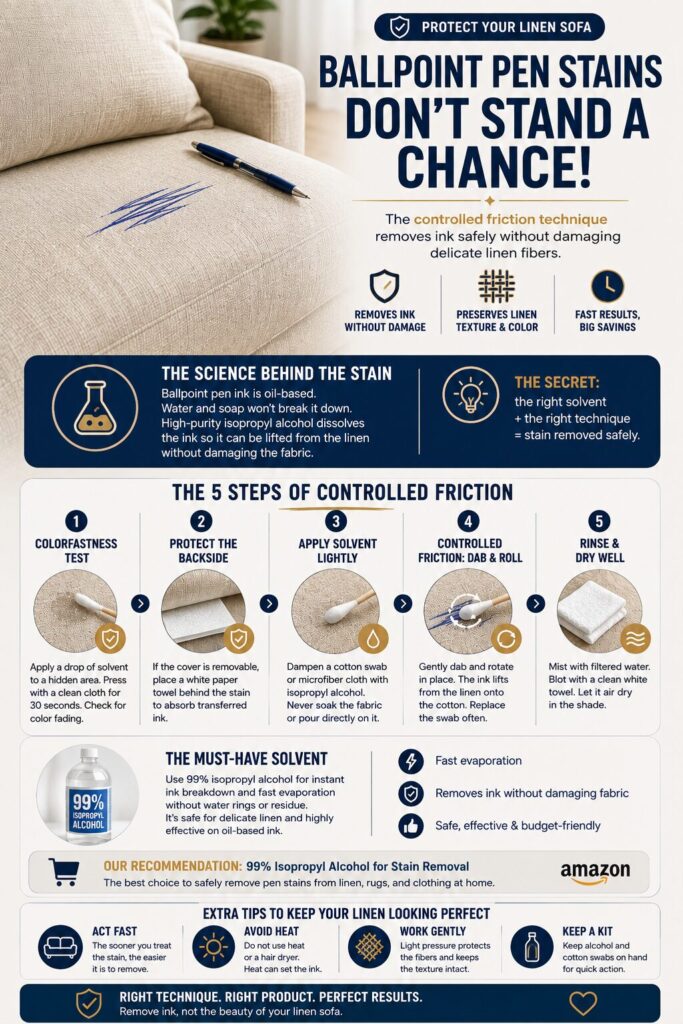
Rinsing and Fiber Restoration
Once the ink pigment has been completely extracted onto your cotton swabs, restore the treated area to remove any lingering solvent residue:
- Lightly mist the spot with a tiny spray of distilled water.
- Press a clean, dry white cotton towel firmly against the area to blot up all residual moisture.
- Allow the fabric to air-dry naturally. Avoid using hot hair dryers, as direct heat can shrink linen fibers or set any microscopic traces of color left behind.
With patience and the proper controlled friction technique, ballpoint pen marks disappear completely while your linen sofa retains its pristine, elegant factory texture.
Saving Your Sofa Without Expensive Professional Fees
Dealing with unexpected spills on high-end fabrics doesn’t have to mean writing off your furniture or paying for expensive emergency restoration services. By understanding the chemistry behind the stain and applying the controlled friction method, you can reverse the damage in a matter of minutes right at home.
By moving methodically, respecting the delicate nature of natural linen, and using high-purity solvents, you safeguard your furniture’s appearance and extend the life of your living room set for years to come.