Opening your closet door to grab a favorite leather jacket or a dress suit stored away for a few months only to find it covered in white, fuzzy mildew spots is a deeply frustrating experience. Beyond the financial loss of damaged garments, removing persistent musty odors from natural textiles can be a major hassle.
In many modern US homes and apartments, walk-in closets are built deep inside the floor plan without exterior windows or direct HVAC supply vents. When warm, humid room air drifts into an unventilated closet space and meets cooler dark corners, moisture condenses onto fabric fibers, creating the ideal breeding ground for mold spores.
The most common mistake homeowners make is relying on scented sprays or hanging air fresheners that merely mask sour odors. To genuinely safeguard your wardrobe, you must tackle moisture at the source. Discover below the complete guide to closet humidity control: how to shield your clothes from mold for good.
Disclaimer: As an Amazon Associate, FixByMyself earns from qualifying purchases made through links in this post at no additional cost to you.
Why Enclosed Closets Are Vulnerable to Fungi
Protecting your wardrobe starts with understanding the three main factors that transform enclosed spaces into mold hot spots.
The first factor is stagnant airflow. Without a steady cross-breeze, relative humidity inside dark cabinets and closets spikes quickly, pushing past the critical 60% threshold where fungal spores germinate.
The second factor is the abundance of organic matter. Natural fabrics like cotton, wool, silk, and genuine leather—combined with microscopic skin flakes and ambient dust on worn clothes—provide rich food sources for mold colonies to thrive.
The third factor is overcrowding hangers. Packing clothing tightly together traps moisture pockets between garments, preventing ambient air from drying out natural fibers.
Practical Strategies to Mold-Proof Your Closet
Shielding your clothing requires pairing smart closet organization habits with active moisture management:
1. Smart Hanger Spacing
Avoid jamming hangers together. Leave at least a finger’s width of open space between each garment hanger to allow air to flow freely through the closet rack. If space is tight, rotate seasonal items out into breathable storage containers.
2. Store Only 100% Dry and Clean Garments
Never hang up clothing that has been worn—even briefly—without letting it air out outside the closet first. Body heat and trace moisture absorbed from outdoors serve as instant fuel for mildew spots during long-term storage.
3. Ditch Cheap Plastic Garment Covers
Standard dry-cleaning plastic bags trap ambient humidity inside with the fabric. Replace non-breathable plastic covers with breathable non-woven fabric or cotton garment bags to protect formal wear, suits, and leather coats.
🛒 The Must-Have Tool for Cordless Closet Moisture Control
For closets lacking electrical outlets, the safest and most efficient way to keep relative humidity below 50% is by using renewable silica gel dehumidifiers or hanging moisture absorbers.
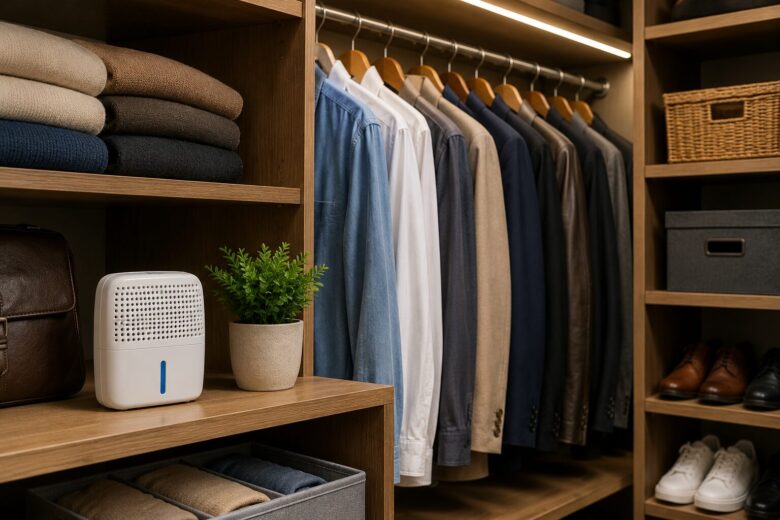
We highly recommend protecting your wardrobe with a Mini Cordless Renewable Silica Gel Dehumidifier on Amazon. Unlike disposable calcium chloride buckets that fill with messy liquid and risk spilling chemicals onto your shoe racks, compact silica units absorb airborne moisture safely into internal beads and can be plugged in to renew over and over again.
Investing in a renewable cordless silica dehumidifier is the smartest, leak-free way to shield expensive leather goods, shoes, and coats from mold damage.

Ventilation Routines and Spot Treatments
Even with dehumidifiers installed, establishing a simple ventilation routine freshens closet air and prevents fungal spores from taking root.
At least once a week, leave your closet doors and drawers wide open for two hours during the day while running your bedroom ceiling fan or setting your central AC to “dry mode.”
If you discover a garment with early signs of mildew, remove it from the closet immediately to isolate spores, spot-treat the fabric with a vinegar solution or warm wash, and allow it to dry completely in direct sunlight before returning it to your wardrobe.
By implementing active humidity control and keeping air moving, your clothes will remain fresh, clean, and protected year-round.