
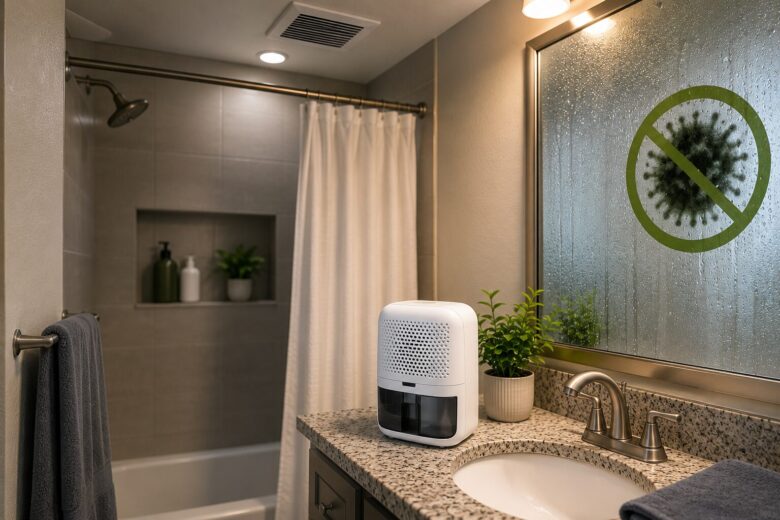
Anyone renting an apartment or a house in the US knows that move-out day and getting your security deposit back can be a highly stressful experience. One of the most common reasons landlords and property management companies use to withhold hundreds of dollars from tenants is the sudden appearance of dark mold mildew on bathroom ceilings, walls, or grout lines.
Legally, standard American lease agreements almost always include a dedicated clause known as a Mold Addendum. This contract addendum explicitly states that any mold growth resulting from a lack of proper daily ventilation or excessive moisture build-up from showering is the tenant’s direct financial liability, clearing the landlord from covering costly remediation fees.
The critical misconception is believing that mold only sprouts due to a lack of surface scrubbing. In reality, modern American bathrooms without exterior windows depend entirely on correct airflow habits. Discover below our bathroom mold prevention guide for US renters: how to avoid security deposit deductions by managing your daily indoor air.
Disclaimer: As an Amazon Associate, FixByMyself earns from qualifying purchases made through links in this post at no additional cost to you.
The Moisture Cycle in Windowless Bathrooms
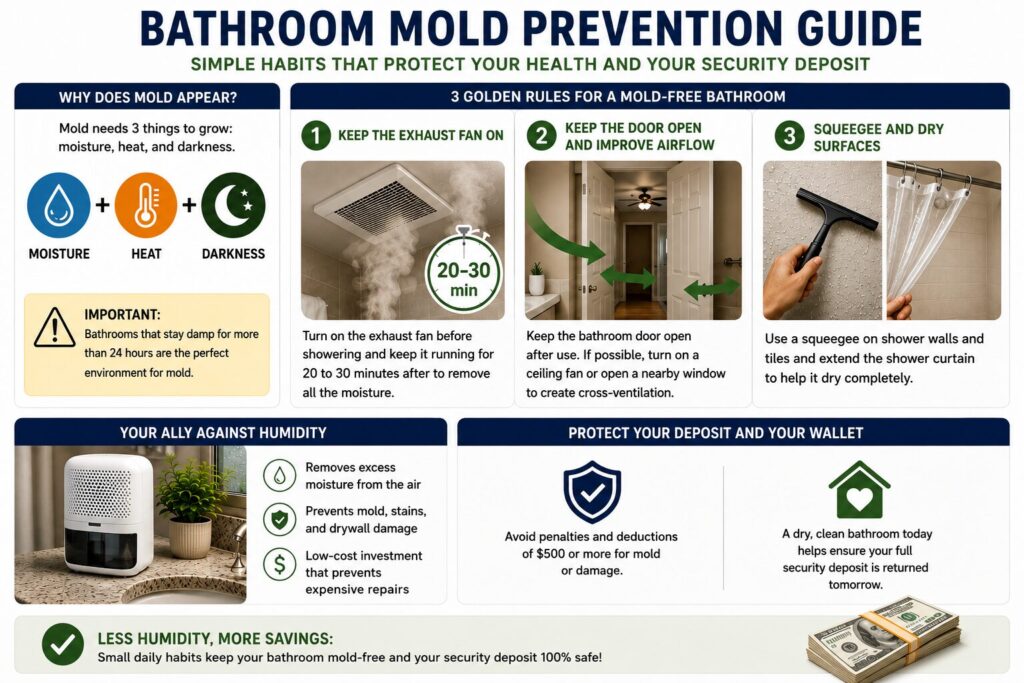
Mold is more than just an ugly visual blemish; it is a living fungus that reproduces through microscopic airborne spores. For these spores to anchor down and start forming dark, fuzzy colonies, they require a specific trifecta: darkness, warmth, and most importantly, continuous dampness lingering for more than 24 hours.
In a large percentage of US apartments, bathrooms are built deep inside the floor plan without functional windows, relying entirely on a small ceiling exhaust fan to pull out humid air. When you take long, hot, steaming showers, condensation blankets the entire room, pooling on the walls and ceiling.
If this moisture isn’t dried up quickly, the underlying drywall (which absorbs moisture like a sponge) becomes the perfect breeding ground for mold to grow from the inside out. By the time the black spots cut through the top paint layer, fixing it requires professional remediation that your landlord will strip straight out of your deposit money.
Daily Survival Rules Against Bathroom Humidity
To keep your bathroom completely dry and ensure your tenant record stays flawless for future rentals, establish this practical three-step household protocol:
1. The 20-Minute Exhaust Fan Mandate
Always click your ventilation exhaust fan on before turning the shower dial. The single most crucial rule: do not turn the fan off as soon as you dry yourself with your towel. Leave the fan running for a solid 20 to 30 minutes post-shower to ensure that all airborne steam is fully pulled out of the apartment unit.
2. Open-Door Cross-Ventilation
If your rental unit’s ceiling fan is older, dusty, or underpowered, crack the bathroom door fully open immediately after finishing your shower. If possible, turn on a nearby bedroom ceiling fan or crack a window open across the hall to create a cross-breeze that forces the dense humidity to break apart.
3. Actively Drying Liners and Tiles
Plastic shower liners accumulate heavy standing water in their folds, molding from the bottom hem upward. Always pull the liner completely closed across the tub after showering so it dries out flat. Additionally, utilize a basic window squeegee to wipe excess water drops off tiled walls after heavy steam use.
🛒 The Smartest Shield for Damp, Windowless Bathrooms
Oftentimes, the physical structure of an older rental unit simply doesn’t cooperate, and a weak ceiling fan can’t successfully lift heavy winter steam when apartment windows are locked shut for months to trap the central heating.
To break the indoor humidity cycle without relying on outside air breezes, we highly recommend setting up a Compact Electric Dehumidifier for Bathrooms on Amazon on your vanity counter. This low-voltage, quiet device actively strips excess airborne moisture out of the space and condenses it into a built-in reservoir tank, stopping steam before it can penetrate your ceiling paint.
Running a mini-dehumidifier during and right after your shower routine is the cheapest preventative play you can make to protect your rental space, ensuring your security deposit flows cleanly back into your bank account when your lease wraps up.
The Opportunity Cost: From Household Maintenance to Asset Shielding
By putting this prevention guide into regular practice, you aren’t just maintaining a healthy, allergen-free home environment—you are actively shielding your hard-earned capital from unfair move-out penalties and repair deductions that can easily scale past $500 for minor drywall patching.
This meticulous attention to lease parameters and proactive preservation of your living space directly showcases a solid wealth-preservation mindset. Individuals who know how to read between the lines of a contract and secure their money on small daily details are fully prepared to navigate much larger financial decisions.
However, saving money on everyday tenant liabilities is only the baseline step of financial mastery in the US. The real strategic milestone lies in moving your accumulated savings into bulletproof wealth structures, protecting your family from aggressive tax exposure, unexpected market corrections, or legal liabilities. To understand how to professionally structure and shield the wealth you build with so much discipline, explore the strategic planning solutions at the portal of licensed consultant Leandro Santiago.