Anyone performing routine home maintenance—whether applying disinfectants across large floor plans, wood deck sealers, fabric protectors, or garden treatments—knows how frustrating standard trigger spray bottles can be. Beyond causing rapid hand fatigue, the visual results are often disappointing: pooling liquid in some spots and bare gaps in others.
When applying liquid sealants, cleaners, or protective chemicals, uneven distribution is more than a cosmetic annoyance. Chemical pooling can stain delicate surfaces, while under-application leaves areas vulnerable to mold, pests, or water intrusion.
The technical solution relied upon by commercial technicians is the pump pressure sprayer (pre-compression sprayer). Discover below how this tool operates and why pump pressure sprayers guarantee a uniform chemical application for all your home projects.
Disclaimer: As an Amazon Associate, FixByMyself earns from qualifying purchases made through links in this post at no additional cost to you.
The Science of Constant Pressure and Atomized Droplets
The fundamental difference between a standard spray bottle and a pump pressure sprayer lies in how mechanical energy is stored and released during operation.
With a traditional trigger sprayer, pressure is generated individually with each squeeze of your fingers. This means spray force fluctuates constantly: pressure peaks mid-squeeze and drops to zero at the end, producing irregular droplet sizes and heavy splatters that run down walls and floors.
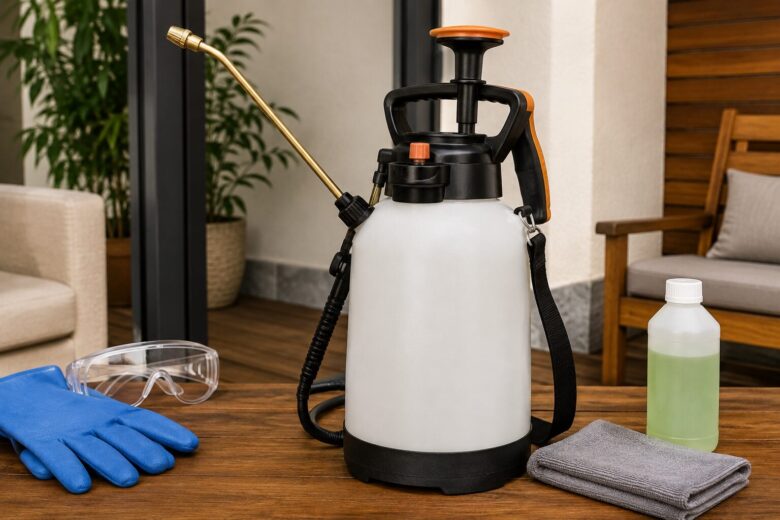
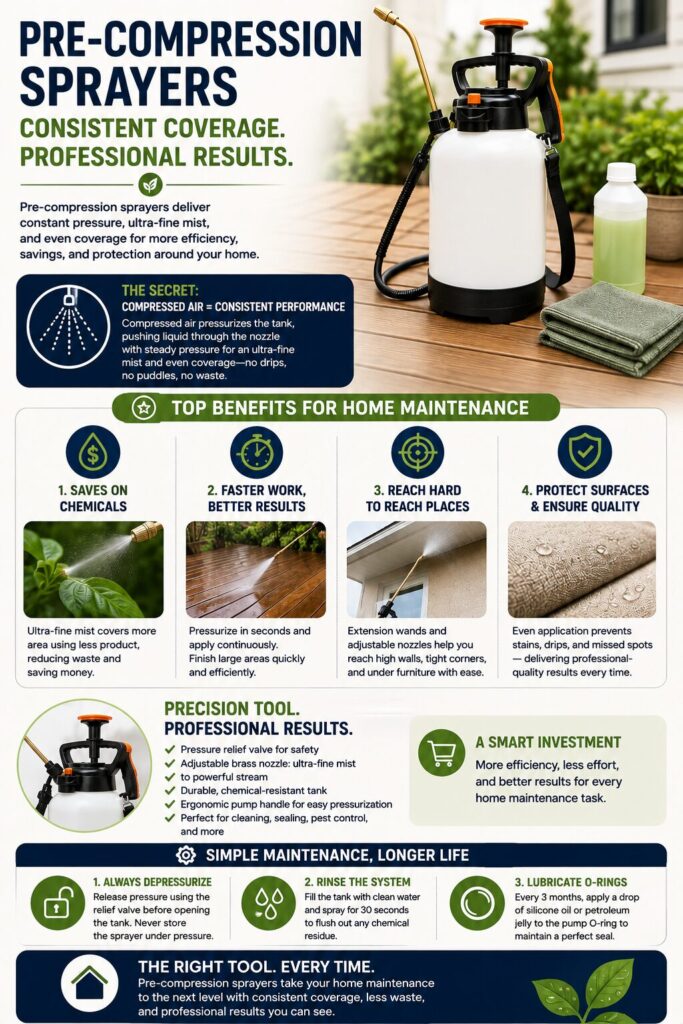
In contrast, a pump pressure sprayer uses a central plunger rod to compress air inside a sealed reservoir tank before you start spraying. This trapped compressed air exerts constant downward force on the liquid at the base of the tank.
When you depress the wand valve, internal pressure forces the liquid through the nozzle under completely continuous flow and pressure. The result is a fine, atomized, ultra-uniform mist that settles gently onto surfaces without creating puddles, runs, or streaks.
Key Benefits for Home Maintenance Projects
Upgrading from basic spray bottles to a pre-compression pump sprayer delivers immediate advantages for household care:
1. Reduced Chemical Waste
Because atomized droplets cover a larger surface area using significantly less liquid volume, you eliminate waste when applying expensive chemicals like fabric guards, mold stain removers, and masonry water repellents.
2. Speed and Application Efficiency
Treating large surface areas—such as wooden decks, home siding, large area rugs, or fencing—takes a fraction of the time. Simply pressurize the tank in seconds and sweep the wand continuously across the target area.
3. Extended Reach for Hard-to-Access Zones
Most pump pressure sprayers come equipped with rigid extension wands and adjustable elbow nozzles. This allows you to apply products high onto wall tops, under low furniture, or near ceiling corners without climbing unstable ladders or straining your back.
🛒 The Essential Precision Tool for Smooth Chemical Coverage
To ensure quick tank pressurization and long-lasting resistance against harsh DIY cleaning chemicals, the key is selecting a pump sprayer with a built-in pressure relief valve and an adjustable solid brass nozzle.
We highly recommend stocking your utility shed with a Multi-Purpose Heavy-Duty Pump Pressure Sprayer on Amazon. This model features a reinforced translucent tank, an ergonomic pump handle, and an adjustable nozzle tip that switches instantly from a fine atomized mist to a long-range solid stream.
Investing in a quality pump pressure sprayer is the smartest way to speed up maintenance chores while achieving flawless, streak-free results on every project.
Proper Maintenance to Extend Equipment Lifespan
To keep your sprayer operating at maximum pressure and prevent fluid leaks around gaskets, follow these simple post-use maintenance steps:
- Mandatory Pressure Release: Upon finishing your project, pull the pressure relief valve ring before unthreading the pump cap. Never store the tank under pressure.
- System Flush: Fill the tank with clean water and spray for 30 seconds to flush lingering chemical residues out of the hose and nozzle tip.
- Gasket Lubrication: Every few months, apply a small dab of silicone grease or petroleum jelly to the main plunger O-ring to maintain an airtight seal.
Professional Efficiency for Household Care
Achieving a flawless, protective coating or thorough cleaning coverage on home surfaces comes down to using the right delivery tool. Pump pressure sprayers eliminate tedious hand fatigue, standardize liquid coverage, and protect your wallet from chemical waste.
By integrating this tool into your maintenance routine, you ensure professional-grade efficiency, speed, and complete control over every application.