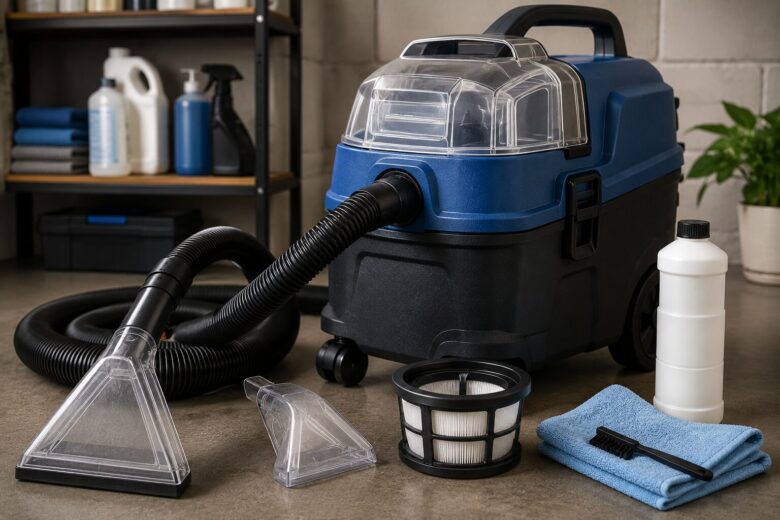
Investing in a carpet extractor or portable spot cleaner is one of the best decisions for keeping carpets, rugs, and couch upholstery fresh and stain-free. However, it is very common to hear homeowners complain that after a few months of use, their extractor “lost suction power,” leaves carpets soaking wet, or emits a foul odor during operation.
In the vast majority of cases, the vacuum motor itself is completely fine. The real culprit is the lack of a basic post-use maintenance routine. The combination of thick detergent residue, pet hair, carpet fibers, and fine grit creates a dense buildup inside the hoses and filter screens, choking airflow and severely reducing suction lift.
If you want to protect your investment and ensure your machine always operates at peak factory power, discover below how to perform preventative maintenance on your carpet extractor to prevent power loss in a few simple steps.
Disclaimer: As an Amazon Associate, FixByMyself earns from qualifying purchases made through links in this post at no additional cost to you.
Why Carpet Extractors Lose Suction and Pressure
To appreciate the necessity of routine maintenance, you need to understand how airflow and liquid travel through the machine’s closed recovery system. An extractor works by spraying water and cleaning solution into the fabric fibers while simultaneously pulling high-lift vacuum airflow to extract dirty water back into the recovery tank.
When the machine is stored with lingering detergent sludge in the flex hose, the dirty water dries into a sticky crust that constricts the internal diameter of the vacuum line.
Furthermore, excessive foam generated by improper soaps or heavy soil buildup can bypass the tank float shut-off and get pulled straight into the vacuum motor turbine, leading to internal motor rust, bearing failure, and thermal overheating.
Step-by-Step Preventative Maintenance Protocol
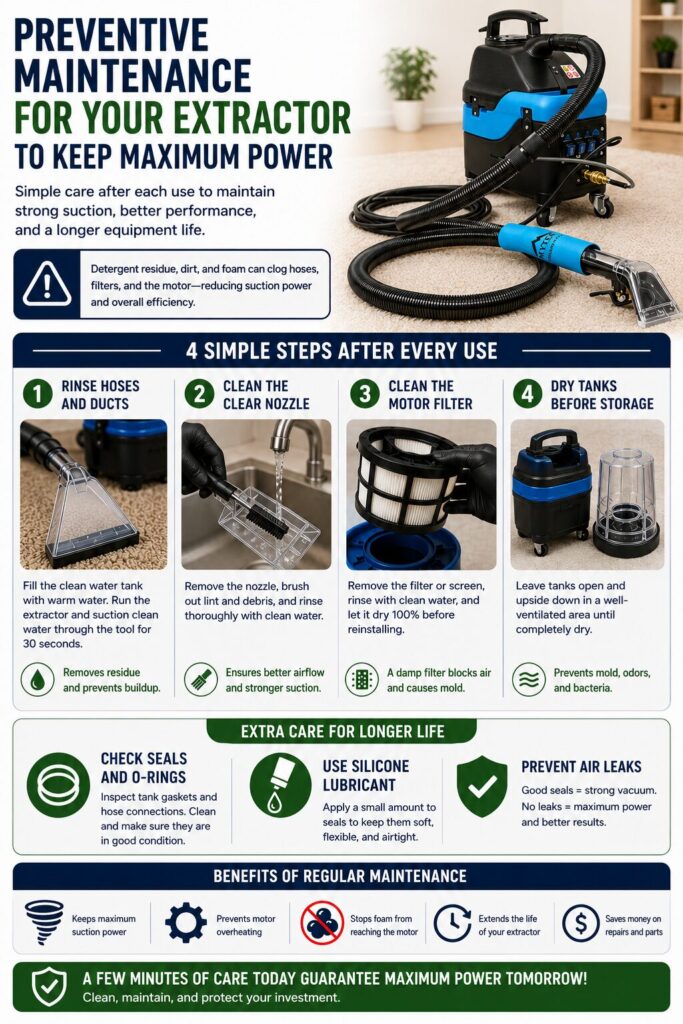
Adopting these four quick post-cleaning habits ensures your carpet extractor maintains its original suction lift for years:
1. Flush the Flex Hose and Wand (Rinse Cycle)
Never store your extractor with dirty solution trapped inside the hose. After dumping the dirty water, fill the clean tank with warm tap water only (no soaps). Turn the machine on and vacuum the clean water through the clear hand tool for 30 seconds. This flushes out sticky residue coating the inner walls of the hose.
2. Clean and Unclog the Clear Extraction Tool
The clear acrylic nozzle hood where water is pulled in regularly traps carpet fibers and pet hair, blocking suction airflow. Remove the clear tool cover, use a small detail brush to dislodge trapped debris, and rinse it thoroughly under a faucet until clear.
3. Wash the Vacuum Motor Mesh Filter
Every extractor features a lint screen or foam filter at the vacuum motor intake (typically located right under the dirty water tank). Remove this screen, wash away dry lint under running water, and allow it to air-dry 100% before reinstalling. Damp filters restrict airflow and breed mildew odors.
4. Fully Air-Dry Tanks Before Storage
Storing an extractor with sealed, damp tanks creates a dark, humid environment where bacteria thrive, causing a sour smell when you turn the machine on next time. Leave tank caps off and invert tanks in a well-ventilated space until all condensation evaporates.
🛒 The Must-Have Protection Liquid for Vacuum Turbines
To prevent soapy foam from reaching your motor and dissolve sticky detergent buildup inside the recovery lines, the single most important chemical tool used by professional detailers is a dedicated liquid defoamer and neutralizing carpet rinse.
We highly recommend keeping a bottle of Bissell Carpet Extractor Liquid Defoamer on Amazon in your utility cabinet. Adding a small splash of this specialized defoamer directly into your dirty water recovery tank instantly breaks surface foam on contact, preventing soap bubbles from riding the airflow into your vacuum motor turbine.
Using a dedicated extractor defoamer is the cheapest insurance policy to protect your spot cleaner or carpet extractor against motor moisture damage and suction loss, keeping your unit running at full strength.
Inspecting Seals and Rubber Gaskets
If your machine still feels underpowered after thorough cleaning, your vacuum loss might be caused by worn or misaligned rubber seals.
Inspect the rubber gaskets located at the base of the recovery tank and hose connection points. If the rubber is dry, pinched, or coated in fine grit, vacuum air will leak out the sides instead of pulling water through the floor tool. Wipe gaskets down with a damp cloth and apply a thin film of silicone grease to maintain an airtight seal.
By spending just five minutes on this preventative care routine after every job, you eliminate motor burnout risks, prevent messy leaks, and keep your carpet extractor performing like new every single time.