Genuine leather is one of the most noble and elegant materials for interior decoration. It delivers sophistication, comfort, and impressive durability. However, many people forget that leather is a natural organic material.
Because it is a natural material, it behaves very similarly to our own skin. Without the right care, the environment takes its toll.
Daily exposure to sunlight and the heat that enters through windows is the main enemy of your furniture. If you have already noticed your sofa losing its shine or feeling rough to the touch, the degradation process has already begun.
The good news is that you can reverse and prevent this problem. With a semi-annual maintenance schedule for leather upholstery, you create an unbeatable barrier against the elements. Discover below how to protect your investment.
Disclaimer: As an Amazon Associate, FixByMyself earns from qualifying purchases made through links in this post at no additional cost to you.
The Hidden Danger: How the Sun Affects Leather
The sun acts silently and destructively on upholstery. Ultraviolet (UV) radiation penetrates the leather fibers, evaporating the natural moisture trapped inside.
Additionally, solar rays break down the essential oils applied during the material’s tanning process.
When these oils dry out, the leather completely loses its elasticity. This is exactly where the first warning signs appear.
Stay alert if your sofa shows color loss, a hardened texture, or micro-cracks on the surface. If nothing is done, these small lines turn into deep cracks and irreversible tears.
The Semi-Annual Maintenance Schedule: Step by Step
To avoid expensive renovations, regularity is your best friend. Creating the habit of caring for the upholstery every six months ensures that the material never reaches the breaking point.
Follow these three essential phases to maintain the factory look for decades.
Phase 1: Deep Cleaning and Decontamination
Before applying any protective product, you need to clean the surface. Sweat, dust, and body oils clog the leather’s pores, preventing it from “breathing.”
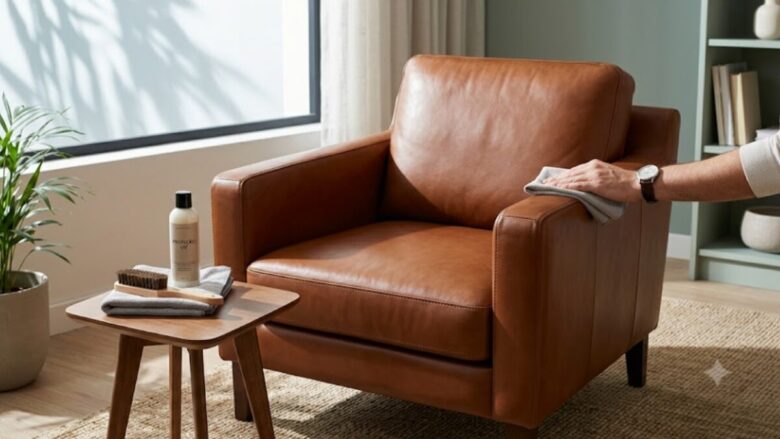
Use a vacuum cleaner with a soft bristle attachment to remove dirt from the corners. Then, use a specific leather cleaner with a pH-neutral formula and a soft sponge.
Golden Tip: Avoid homemade recipes with vinegar, alcohol, or dish soap. These products are highly abrasive and drastically accelerate the drying out that you are trying to fight.
Phase 2: Deep Hydration and Nutrition
With the leather clean and its pores cleared, it is time to restore the oils that the sun evaporated. Applying a proper leather conditioner is the most important step in the schedule.
Apply the product with a microfiber cloth, making gentle, circular motions. The leather will absorb the moisturizer quickly. This process restores flexibility and a velvety touch to the furniture, preventing it from cracking when weight is applied.
Phase 3: UV Protection (The Shield Against the Sun)
Hydration alone does not withstand the impact of direct sunlight. To solve this, the industry developed leather protectors with integrated UV blocking.
They work exactly like the sunscreen we use at the beach. This product creates an invisible film that reflects solar radiation, preventing fading and keeping the upholstery temperature friendlier.
🧴 [Click here to check the best leather conditioners and protectors on Amazon]
Practical Schedule Application Table
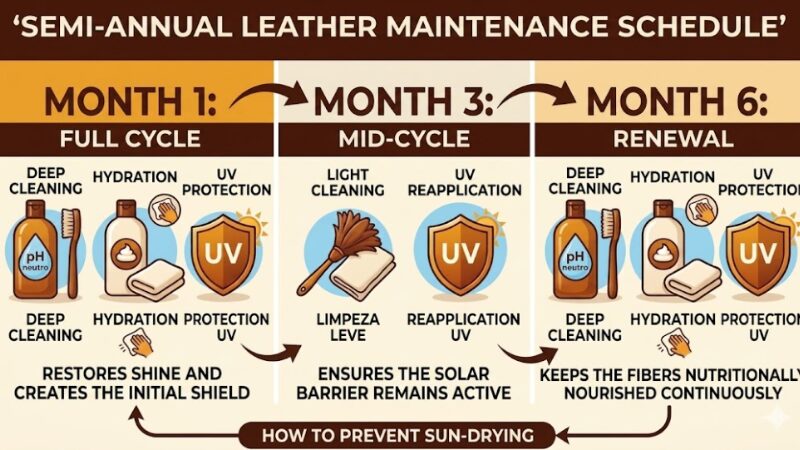
To make organizing your home care routine easier, use the structure below as a quick reference guide:
| Cycle Period | Required Action | Direct Benefit | Estimated Time |
|---|---|---|---|
| Month 1 (Start) | Deep cleaning + Hydration + UV Protector | Restores shine and creates the initial shield | 45 minutes |
| Month 3 (Mid-Cycle) | Light cleaning + UV Protector Reapplication | Ensures the sun barrier remains active | 15 minutes |
| Month 6 (Renewal) | Restart the full cycle | Keeps fibers continuously nourished | 45 minutes |
3 Extra Tips to Prevent Drying Out in Daily Life
In addition to following the semi-annual treatment, small routine changes in the room help preserve the leather for much longer.
- Control direct light: If your sofa is positioned near windows, use blackout curtains or install solar protection films (window tint) on the glass. They block up to 99% of UV rays.
- Beware of climate control: The constant use of air conditioning and heaters removes moisture from the ambient air. If the room is too dry, the leather will suffer the consequences. Consider using a humidifier on more extreme days.
- Simple weekly maintenance: Once a week, wipe with a microfiber cloth slightly dampened with distilled water. This removes daily dust without stripping the protection you applied.
🧽 [Click here to check this foam and microfiber applicator pad set]
The Bottom Line
Caring for a piece of leather furniture does not require daily effort, but rather consistency. Following this maintenance plan is the guarantee that you won’t need to spend a fortune with upholsterers or replacing furniture ahead of time.
Your sofa can last a lifetime, as long as you offer the protection it needs against the elements.
Now we want to hear from you: Have you ever noticed your leather furniture cracking or fading from the sun? Do you have any questions about which product to choose for your specific type of leather? Leave your comment below and let’s talk about it!