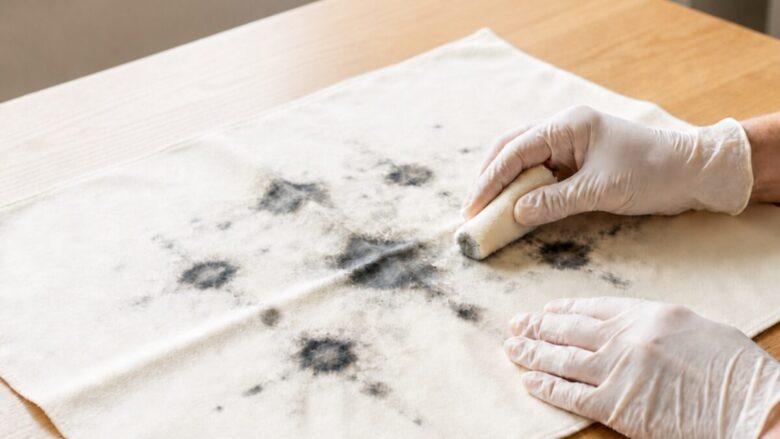
Finding your favorite garment, a fine curtain, or a cherished piece of upholstery covered in dark mold stains is enough to cause true household panic. Mold doesn’t just ruin the look of the material; it also brings an unpleasant odor and health risks.
Faced with this scenario, many people’s first instinct is to reach for the strongest product in the laundry room: traditional chlorine bleach. However, if you are dealing with colored fabrics and sensitive fibers, this move can be a death sentence for your textile. Chlorinated bleaches destroy dye molecules, leaving white or faded spots that are impossible to reverse.
The good news is that removing stubborn mold spots from delicate fabrics without fading the original color is entirely possible. The secret does not lie in brute scrubbing force, but rather in gentle chemistry, patience, and respecting the reaction time of the right products. In this practical guide, you will learn the definitive method to save your pieces and restore them to their original state with a professional finish.
Disclaimer: As an Amazon Associate, FixByMyself earns from qualifying purchases made through links in this post at no additional cost to you.
Why Mold Sticks and Alters Sensitive Fibers
To understand how to eliminate the problem, we must first understand the enemy. Mold is a cluster of living fungi that proliferate in warm, dark environments with high residual humidity. When it finds natural fibers—such as silk, linen, wool, and fine cotton—it finds a rich source of food.
Unlike superficial dirt like dust or mud, mold fungi launch microscopic “roots” (called hyphae) that penetrate deeply into the weave of the fabric. As the mold becomes embedded, it begins to digest the fiber structure itself, weakening the material.
For this reason, trying to scrub the stain vigorously with a stiff brush is a critical mistake: you will break the fibers already weakened by the fungus, creating holes, frays, and a worn-out look, while spreading spores to other parts of the garment. Removal needs to happen through molecular release, not mechanical friction.
The Big Mistake: What You Should Never Use on Colored Fabrics
In the DIY culture, understanding what not to do is just as important as knowing the correct steps. When dealing with delicate, colored fabric, there are two main traps:
- Chlorine Bleach: These products have an extremely high oxidation power. They don’t just kill the fungus; they chemically break down the dye molecules that color the fabric, resulting in instant fading.
- Immediate Drying in Harsh Sun with Product Residue: The sun is an excellent natural ally against fungi, but placing a garment with remnants of chemicals (even homemade ones) under direct midday sun can burn the fiber, fix the mold stain permanently, or yellow the fabric irreversibly.
👉 [Click here to check the best color-safe oxygen bleaches on Amazon]
Safe Homemade Ingredients and How They Work
To perform a deep clean without damaging the original pigments, we are going to build a team with three easy-to-find and incredibly effective ingredients:
- White Distilled Vinegar: The acetic acid in vinegar is a mild natural disinfectant. It alters the pH of the environment, killing the fungi and breaking the mold’s protective barrier without attacking the fabric dye.
- 3% Hydrogen Peroxide: This is the color-safe version of bleach. The effervescence of active oxygen penetrates the weave, lifting the dark pigments of the embedded mold without stripping the garment’s original dye.
- Baking Soda: Used to create a gentle contact paste when needed, helping to keep liquid ingredients acting exactly on top of the stain without running.
Technical Step-by-Step: Removing Mold Without Fading Color
Follow these steps strictly to ensure maximum safety for your colored fabrics.
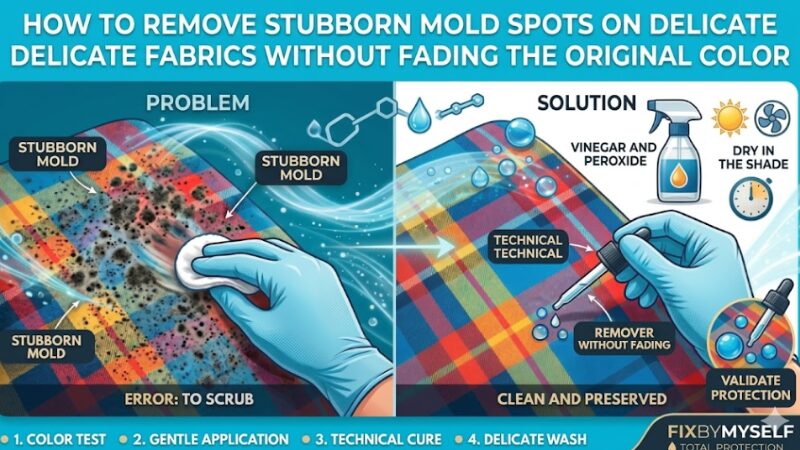
Step 1: The Colorfastness Test (Crucial)
Before applying any mixture to the main stain, you must perform a safety test. Choose a hidden part of the garment, such as the inside of a hem, the inner lining of a pocket, or an interior seam. Apply one drop of vinegar and one drop of 3% hydrogen peroxide. Wait 5 minutes and press a clean white cloth against the spot. If the white cloth remains clean, the color is fast, and you can proceed. If the color transfers to the cloth, the fabric does not accept homemade wet treatments and should be taken to a professional dry cleaner.
Step 2: Localized Application
Dampen the stained area directly with white distilled vinegar. If the stain is old and stubborn, make a soft paste by mixing baking soda and 3% hydrogen peroxide. Using your fingertips (wearing gloves) or an ultra-soft bristle brush (like a children’s toothbrush), dab the paste over the mold. Do not scrub; simply press lightly for the product to penetrate.
🧽 [Click here to check this soft-bristle brush set for fabric cleaning]
Step 3: Chemical Reaction Time
Let the mixture sit in the shade for 15 to 30 minutes. During this time, you will see a slight effervescence. This means the oxygen is releasing the mold roots from inside the fiber. Keep the garment away from direct sunlight during this phase.
Step 4: Rinse and Delicate Wash
Rinse the area thoroughly with cold water to completely remove mold and product residues. Then, wash the entire garment by hand or on the delicate cycle of your washing machine using a mild laundry detergent. Add half a cup of vinegar to the fabric softener compartment to help completely eliminate any residual musty odor. Let it dry naturally in the shade in a well-ventilated area.
Comparison Table of Action Time by Fabric Type
Every material reacts differently to household treatments. Use the table below as a reference guide to monitor the process:
| Delicate Fabric Type | Color Sensitivity | Maximum Recommended Time | Execution Advice |
| Silk and Satin | Extremely High | 5 to 10 minutes | Use only vinegar and liquid hydrogen peroxide. Avoid heavy pastes and never rub the fiber. |
| Fine Linen and Wool | High | 15 minutes | Visually monitor every 5 minutes. Rinse with cold water immediately after the time is up. |
| Fine Cotton / Knits | Medium | 20 to 30 minutes | Allows the use of baking soda paste for very old and stubborn stains. |
Professional Prevention: How to Avoid Mold Return
After going through all the work to recover your item, the main goal becomes preventing the problem from happening again. Mold is fought with air circulation and humidity control.
Never store clothes or fabrics that have been worn directly back into your closet, as body sweat and natural skin moisture are ideal fuels for fungi. Ensure your wardrobe or closet receives periodic ventilation—leaving the doors open for a few hours on dry, sunny days makes a massive difference. Additionally, using moisture absorbers or homemade baking soda sachets helps keep internal humidity under strict control.
Conclusion
Preserving delicate and colored fabrics requires respecting chemical processes and, above all, patience. Wanting to solve the problem in two minutes using abrasive products is the reason why so many beloved clothes end up faded or torn in the trash. By following the color test protocol, gentle application, and the correct chemical cure time, you maintain the integrity of your clothes without spending a fortune.
Now we want to hear about your experience: do you have a favorite piece of clothing, curtain, or delicate upholstery that you thought was completely lost to mold? Do you have any questions about how to apply the method to your specific fabric type? Leave your comment below, and let’s talk about the best solution for your case!