Have you ever tried to scrub a stubborn stain out of your couch, car seat, or a favorite piece of clothing, only to end up making it look much worse? Using the wrong brush is one of the most common mistakes in home maintenance, leading to ruptured fibers, pilling, and completely frayed fabrics.
Many people mistakenly believe that the harder the bristles and the harder you scrub, the faster the dirt will come out. However, efficient textile cleaning relies on controlled, proper friction, not brute force that destroys the lifespan of your household materials.
Learning how to evaluate your cleaning tools is what separates basic chores from professional-grade preservation. In this article, you will dive into our comprehensive bristle stiffness guide: how to choose the right brush for every fabric type without fraying, protecting the long-term value of your home assets.
Disclaimer: As an Amazon Associate, FixByMyself earns from qualifying purchases made through links in this post at no additional cost to you.
Understanding Bristle Types and Their Materials
The cleaning brushes available on store shelves are not all created equal, and the secret to success starts with the material the bristles are crafted from. Generally, there are three primary groups of bristles you should know.
Natural bristles (such as horsehair or boar hair) are extremely soft, flexible, and feature split ends that will not scratch or cut delicate fibers. They are the go-to choice for fine apparel, delicate garments, and high-end materials.
On the other hand, synthetic bristles (like nylon and polypropylene) are highly durable, chemically resistant, and do not lose their shape easily. However, the thickness of these synthetic fibers varies wildly, ranging from ultra-flexible strands to rigid blocks that can tear through lightweight clothing.
How to Match Wrench Stiffness with the Right Fabric
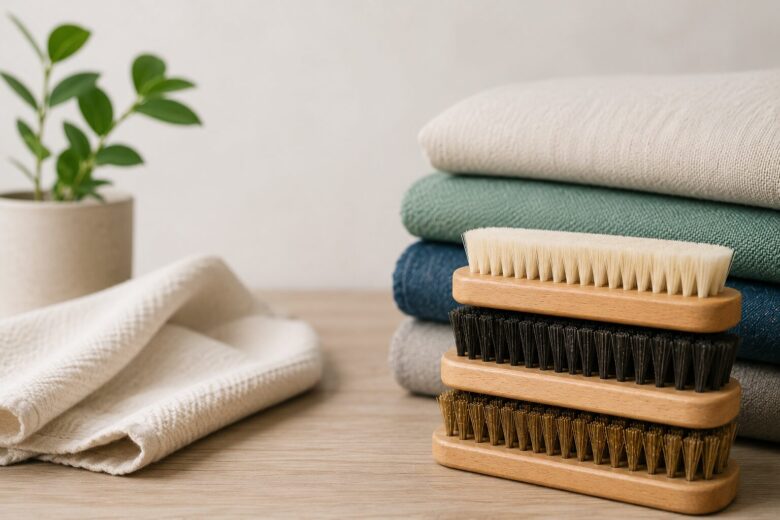
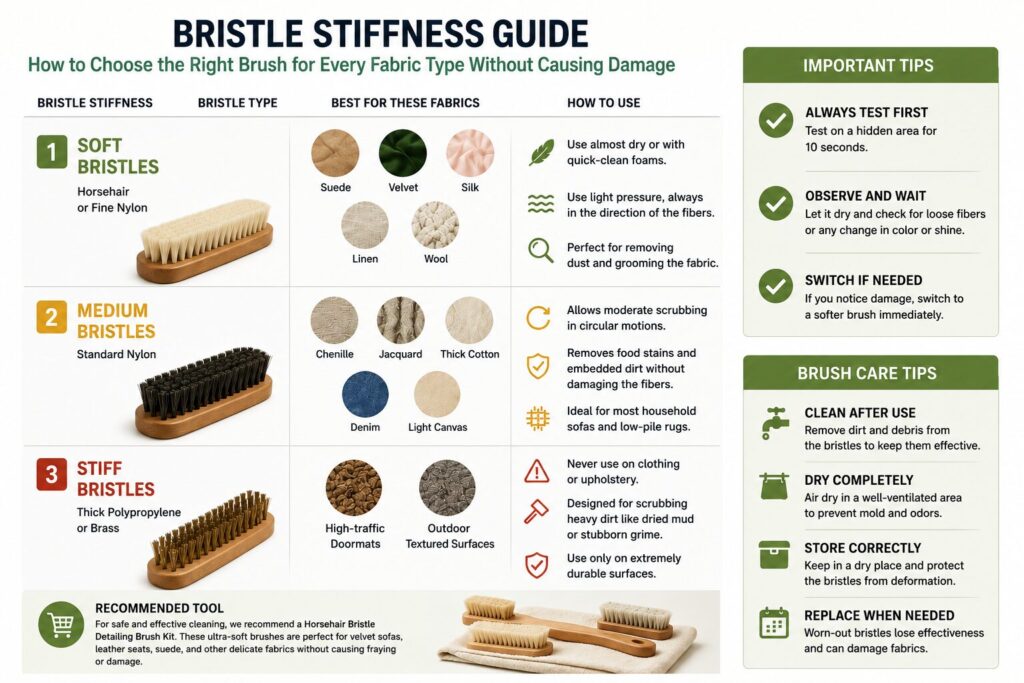
To ensure you never accidentally ruin another surface while cleaning, we have broken down bristle stiffness into three practical everyday application categories:
1. Soft Bristles (Horsehair or Ultra-Fine Nylon)
- Safe Fabrics: Suede, velvet, silk, linen, and fine wool.
- How to Use: Use these almost dry or with specialized quick-dry cleaning foams. Work in gentle, light strokes, always moving in the same direction as the natural nap (especially on suede) to loosen surface dust or lift the fibers.
2. Medium Bristles (Standard Nylon)
- Safe Fabrics: Chenille, Jacquard, heavy cotton, denim, and lightweight canvas.
- How to Use: Ideal for most residential fabric sofas and low-pile area rugs. They allow for moderate scrubbing in circular motions to break down food spills or ground-in dirt without causing the fabric to develop unwanted fuzz.
3. Stiff Bristles (Heavy Polypropylene or Brass wire)
- Safe Fabrics: Heavy-duty outdoor rugs, coir doormats, and textured exterior surfaces.
- How to Use: Never use these brushes on regular clothes or common indoor upholstery. They are meant exclusively for scraping away heavy crusts, dried mud, or embedded debris where the underlying weave is exceptionally robust.
🛒 The Must-Have Tool for Safe Home Cleaning
Preventing accidents on expensive furniture textiles requires having the right tool ready in your laundry room, eliminating the risky guesswork of using regular utility scrubbers on delicate surfaces.
To guarantee complete safety during your deep cleaning projects, we highly recommend the Genuine Horsehair Interior Detailing Brush Kit on Amazon. This set provides the exact softness required to clean velvet couches, leather car seats, and genuine suede without opening the fiber weave or causing frayed edges.
Investing in detailing-specific household tools is the smartest way to keep your furniture and apparel looking brand new, saving you substantial amounts of money on early reupholstery or replacements.
Practical Tips to Test a Brush Before You Scrub
Even when following general stiffness recommendations, every textile manufacturer utilizes a slightly different weave composition. Because of this, adopting a simple safety protocol before you start scrubbing is crucial.
Always perform the “blind spot test.” Select a hidden area of the fabric (such as the back of a removable couch cushion or the inside hem of a pair of pants) and scrub firmly with a damp brush for 10 seconds.
Let it dry completely and examine the spot under good lighting. If you notice tiny loose fuzz strands or a noticeable change in the fabric’s original sheen, the bristles are too stiff for that specific surface. Switch to a softer option immediately.
Keeping Your Fabrics Looking Brand New Long-Term
Mastering the choice of your cleaning tools completely upgrades the way you care for your property. By respecting the natural resistance limits of every individual textile fiber, your household maintenance stops being a risk and becomes a true shield for your belongings.
Consistency and the proper technical use of bristles ensure that the original texture and rich color of your upholstery remain intact year after year.
Organize your utility brushes this coming weekend, categorize them using this practical guide, and experience the confidence of achieving flawless, entirely fray-free home care.