Have you ever finished cleaning a sofa or a car seat, where the fabric feels perfectly dry to the touch, only to have the customer call days later complaining about a sour, persistent smell of mold?
The greatest danger in cleaning upholstered surfaces is not the visible dirt you remove, but rather the water that remains trapped within the density of the internal foam. Relying only on “touch” or guessing the drying time is the number one mistake that destroys the reputation of professionals and frustrates those who perform the process at home.
This is exactly where digital moisture meters for upholstery come in, as the only precision tool capable of reading what your eyes cannot see and ensuring that the piece is completely safe for use.
Disclaimer: As an Amazon Associate, FixByMyself earns from qualifying purchases made through links in this post at no additional cost to you.
The Hidden Danger of Wet Foam
When we use high-pressure extractors, we inject water mixed with chemical products into the deep layers of the upholstery. Even if the equipment’s vacuum power is excellent, a percentage of moisture inevitably remains trapped in the core of the foam.
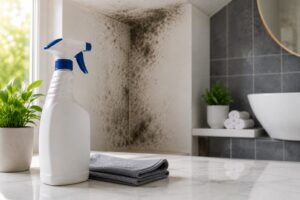
If the upholstery is closed up or delivered to the customer with this internal moisture trapped inside, it creates the perfect dark and stuffy environment for the accelerated proliferation of fungi, bacteria, and dust mites. The direct result of this is the dreaded “wet dog” smell.
In addition to health problems and bad odor, the accumulation of water in the lower layers can, in the long term, rot the furniture’s internal wooden structure or cause premature oxidation of the steel springs, generating severe financial damage.
How Do Digital Moisture Meters for Upholstery Work?
These devices measure the electrical resistance or capacitance of the material to determine the amount of water present in it. There are two main types of technology in the cleaning market: pin-type meters (probe style) and induction meters (pinless).
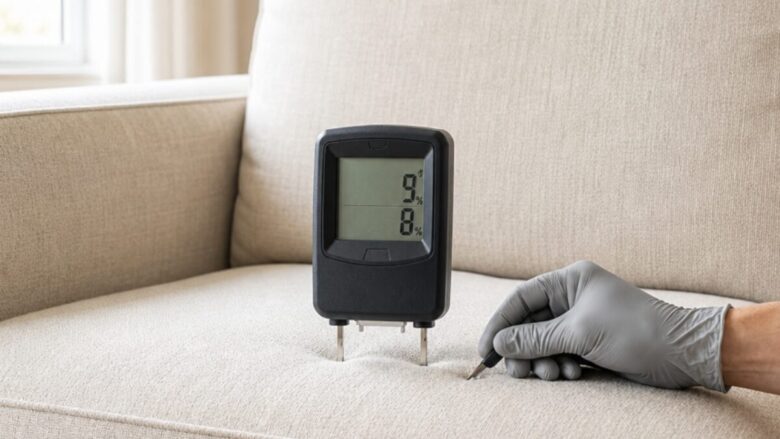
- Pin Meters (Probe): These models require you to slightly pierce the material so that the electrical current passes between the two metallic tips. Although they are very precise, they can leave small visible holes if used incorrectly on very thin fabrics or leather.
- Induction Meters (Pinless): These devices perform a non-destructive reading. They use electromagnetic radio waves to scan up to a few centimeters below the surface through the fabric, without the need to pierce or damage the material, displaying the exact percentage of water instantly on the digital screen.
➡️ [Check Out the Best Deals on Digital Moisture Meters on Amazon]
How to Know if the Internal Foam is 100% Dry in Practice
To perform a reliable and professional technical test upon delivering your service, you must follow a simple mapping protocol:
- Map by Zones: Visually divide the upholstery into smaller sections (seats, backrests, and armrests).
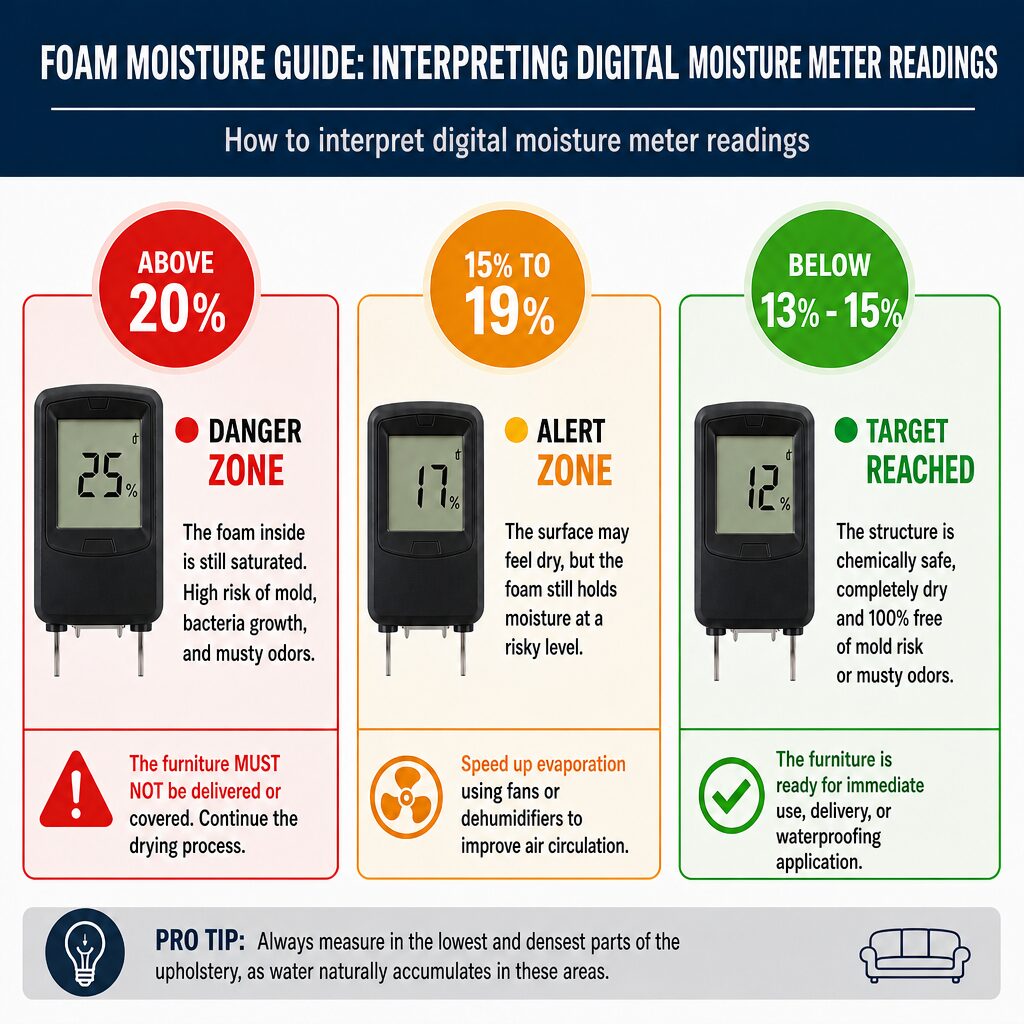
- Focus on Critical Points: Position the meter’s sensor on the densest areas and, especially, on the lowest parts of the structure, where gravity naturally accumulates the water that drains down.
- Analyze the Results on the Screen: Hold the device steady until the numbering stabilizes.
To safely interpret the data displayed on the digital viewfinder, follow this market standard:
- 🔴 Above 20% moisture (Danger Zone): The internal foam is still soaked. The upholstery must not be covered or delivered, and the drying process needs to continue.
- 🟡 Between 15% and 19% moisture (Alert Zone): The surface fabric may feel dry, but the core still holds an amount of water that poses future risks.
- 🟢 Below 13% to 15% moisture (Goal Achieved): The structure is chemically safe, fully dry, and ready for use or waterproofing.
Quick Comparison: Pin Sensors vs. Induction
| Meter Type | Pros | Cons | Fabric Safety |
| Pin Meter (Probe) | High precision in exposed foams, lower cost. | Slow testing, requires physical piercing. | Can leave visible marks if not applied to hidden seams. |
| Induction Meter (Pinless) | Deep, fast, and instant sensor reading. | Higher initial cost. | Totally safe for delicate fabrics, suede, linen, and genuine leather. |
➡️ [View Top-Rated Pinless Moisture Meters with Discounts on Amazon]
Strategies to Speed Up Drying if the Device Shows Moisture
If you performed the measurement and the numbers on the digital panel showed that the foam is still in the alert or danger zone, there are three fundamental steps to correct the problem quickly:
The first step is to position professional floor drying fans or air blowers directed straight at the base of the upholstery, forcing accelerated air circulation. In enclosed spaces or auto detailing garages, turning on an air dehumidifier helps extract the water that evaporates from the furniture, preventing it from returning to the fabric.
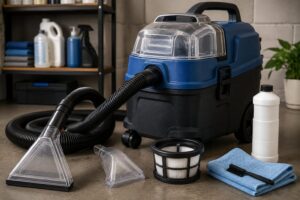
Finally, make a new pass with your professional extractor. This time, work exclusively with the water trigger closed, focusing only on the technical lifting power of the transparent nozzle to pull out the remaining moisture that has risen to the surface.
The Specialist’s Verdict
Using cutting-edge technology to validate your domestic or professional work is not an unnecessary whim, but rather an indispensable technical shield. The customer or residents of the house accept the value of the service much more easily when they witness a digital tool proving, through clear data on the screen, that the cleaning was executed safely from end to end.
Monitoring the actual progress of the drying process is the best way to guarantee the health of your family or the long-term success of your cleaning business.
Now we want to hear from you: What method or criteria do you usually use today to ensure the complete drying of your upholstered surfaces? Have you ever gone through the scare of dealing with bad odor in a piece of furniture after washing it? Leave your story in the comments below and let’s exchange experiences!