
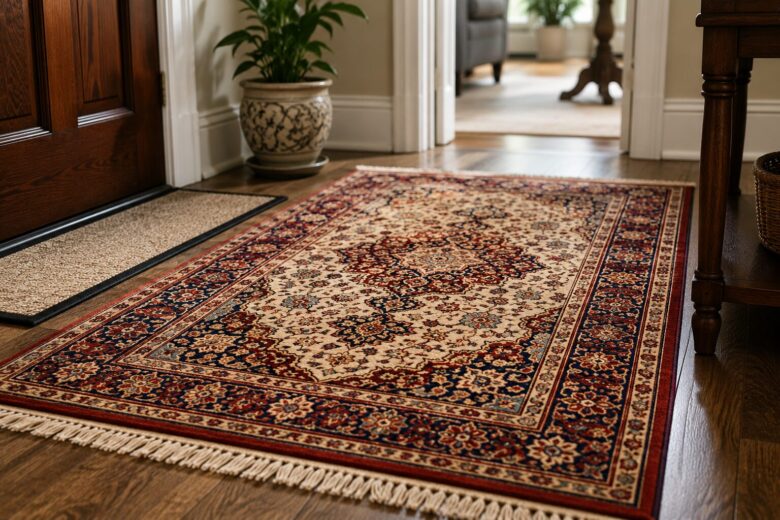
Handmade Oriental rugs—whether Persian, Turkish, or Indian—are true textile works of art. Crafted with intricate hand-knotted wool, silk, or cotton, these pieces bring warmth, heritage, and timeless elegance to any home. However, when placed in high-traffic zones like hallways, entryways, or main living spaces, they endure an invisible daily threat: mechanical wear and tear.
Unlike natural aging from ambient light, mechanical wear occurs through two combined destructive forces: constant shoe friction pushing down on the pile and the abrasive action of mineral grit (sand and soil) trapped deep within the rug’s foundation. Over time, wool fibers break, fringe unravels, and the rug loses its original density and value.
If you have a valuable rug sitting in a busy walk zone in your home, understanding how to protect Oriental rug fibers from mechanical wear in high-traffic areas is crucial to preserving the integrity of the weave and avoiding costly professional restoration.
Disclaimer: As an Amazon Associate, FixByMyself earns from qualifying purchases made through links in this post at no additional cost to you.
The Two Primary Causes of Mechanical Fiber Wear
To safeguard your hand-knotted rug’s foundation, you need to understand precisely what happens underneath your feet with every step taken across the room.
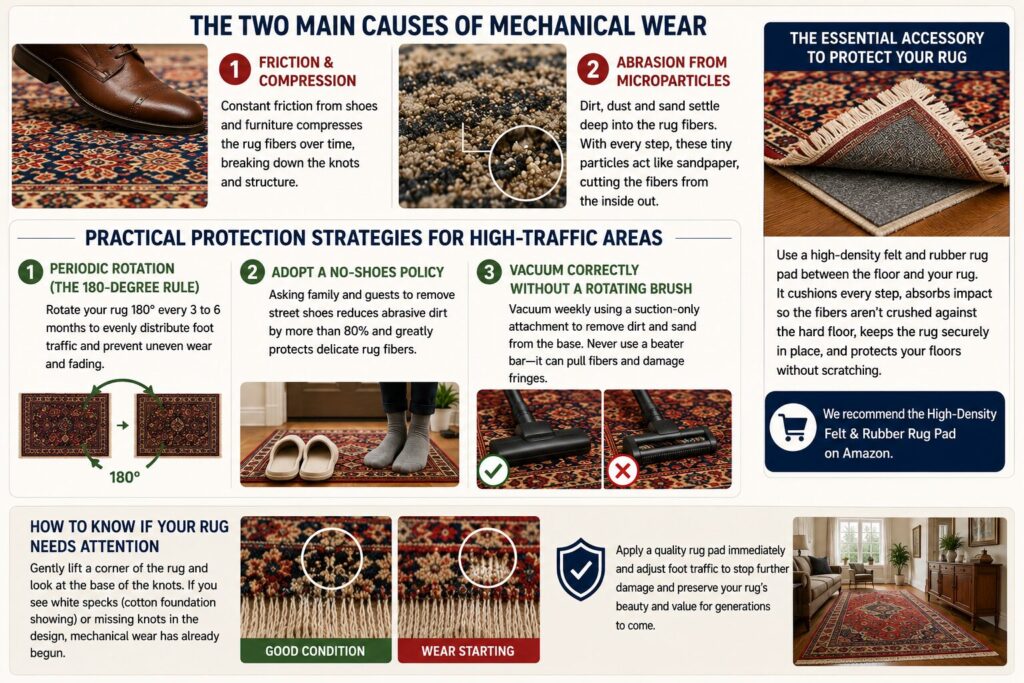
The first cause is direct surface friction and impact compression. Hard-soled shoes, high heels, and heavy furniture movement crush the wool or silk loops. Without proper impact shock absorption, the delicate natural fiber is smashed repeatedly against the unyielding hard floor (hardwood or tile), breaking the knot structure.
The second cause—and by far the most destructive—is subsurface micro-grit abrasion. Outdoor soil brings microscopic silica and sharp sand grains indoors. These heavy particles sink to the very bottom of the rug pile. With every step, these grains act like tiny saws, severing the inner wool fibers from the bottom up.
Practical Preservation Strategies for Busy Walkways
Protecting a fine antique or hand-knotted runner in busy hallways requires establishing a few essential care routines:
1. Regular 180-Degree Rotation
In narrow hallways and living rooms, foot traffic follows a predictable path. Rotating your rug 180 degrees every 3 to 6 months redistributes the heel impact evenly across the entire surface, preventing localized bald spots or uneven pile crushing.
2. Implement a Strict “No-Shoes” Rule
Encouraging family and guests to remove outdoor shoes before walking across fine rugs is the single most effective barrier against abrasive outdoor grit. Walking in socks or soft house slippers reduces aggressive friction on natural wool by over 80%.
3. Vacuuming Without a Beater Bar
Vacuum your rug weekly to extract sharp sand particles before they slice the foundation threads. However, never use a rotating motorized brush head (beater bar). The motorized bristles aggressively yank out hand-knotted wool tufts and destroy delicate end fringes. Use suction-only attachments.
🛒 The Must-Have Protection Cushion for Fine Rugs
The primary technical recommendation from textile conservators for high-traffic zones is installing a dense, high-grade felt and rubber rug pad underneath the piece.
We highly recommend anchoring your rug with a Dual-Surface Felt and Rubber Heavy-Duty Rug Pad on Amazon. Unlike thin waffle plastic grip pads, a thick needle-punched felt pad acts as a shock absorber, dispersing the impact of foot steps so the wool pile is not crushed against the hard floor, while the rubber backing keeps the rug from sliding.
Investing in a premium dual-surface felt pad is the most affordable and permanent way to extend the lifespan of your Oriental rug, keeping it intact for future generations.
Identifying Early Signs of Mechanical Fiber Damage
You can perform a quick visual inspection by gently folding back an edge of the rug to examine the base of the pile. If you see white foundation threads peaking through the wool or faint gaps in the detailed pattern, mechanical friction has already begun wearing down the wool.
In these cases, immediately placing a thick felt pad underneath and altering walking paths is urgent to stop further fiber loss.
Caring for fine textiles comes down to smart mechanical protection. By absorbing foot shock and controlling grit abrasion, your Oriental rug will remain a stunning focal point in your home for decades to come.