Have you ever bought an expensive, heavy-duty cleaning product thinking it would solve a tough stain, only to find out it discolored the fabric or stripped the shine off your floor?
The biggest secret manufacturers hide in the fine print on labels is a tiny chemical scale called potential hydrogen. Understanding this single concept is what separates amateur cleaners from those who achieve professional results at home.
In this practical guide, you will learn once and for all how to decode cleaning products pH. Discover exactly when to open your cabinet and choose an acidic, neutral, or alkaline cleaner to destroy dirt without damaging your home.
Disclaimer: As an Amazon Associate, FixByMyself earns from qualifying purchases made through links in this post at no additional cost to you.
What is the pH Scale in Practical Cleaning?
To master home cleaning, you don’t need to be a laboratory scientist. In practice, the pH scale is simply a ruler from 0 to 14 that measures the acidity or alkalinity of a liquid solution. The number 7 represents absolute neutral.
Cleaning chemicals work through neutralization reactions. This means that to remove dirt efficiently, you need to use a product with a pH opposite to the nature of that specific dirt.
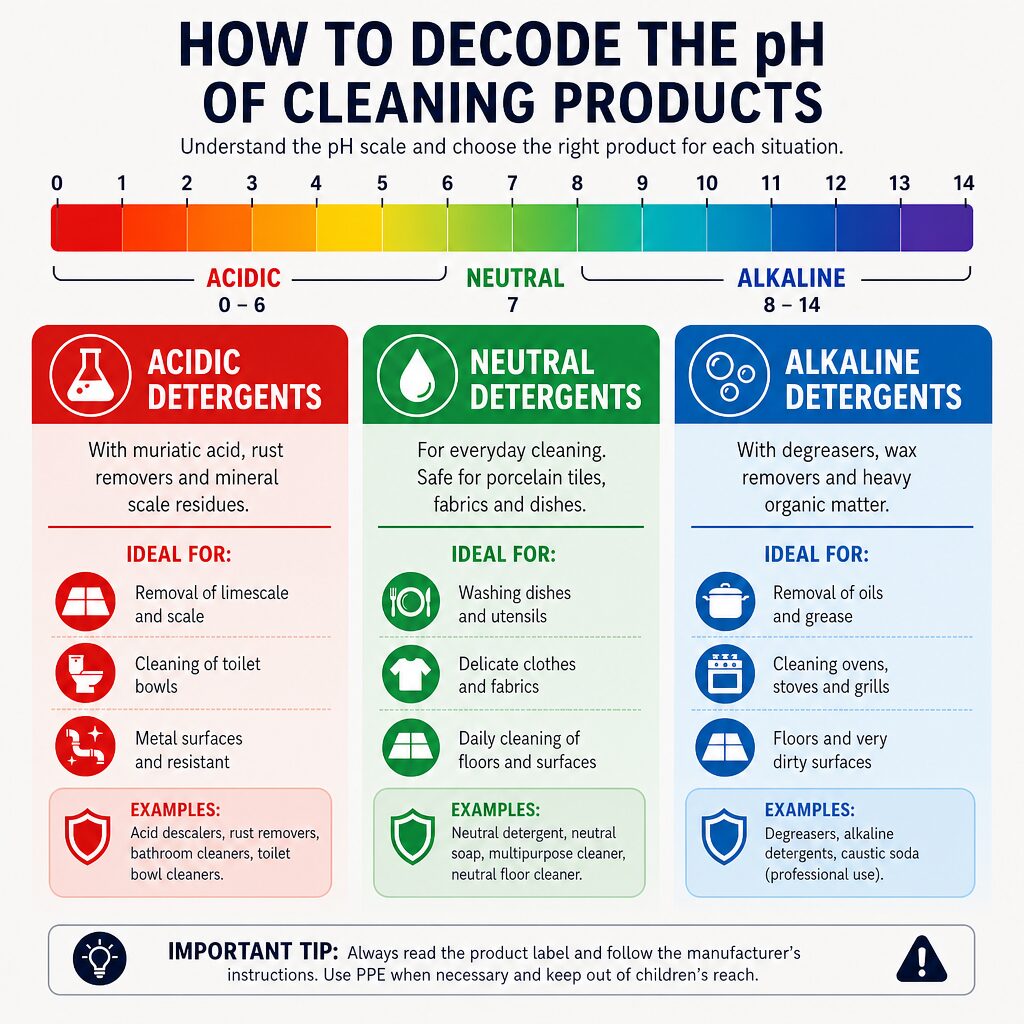
Here is the basic breakdown of the scale applied to your daily routine:
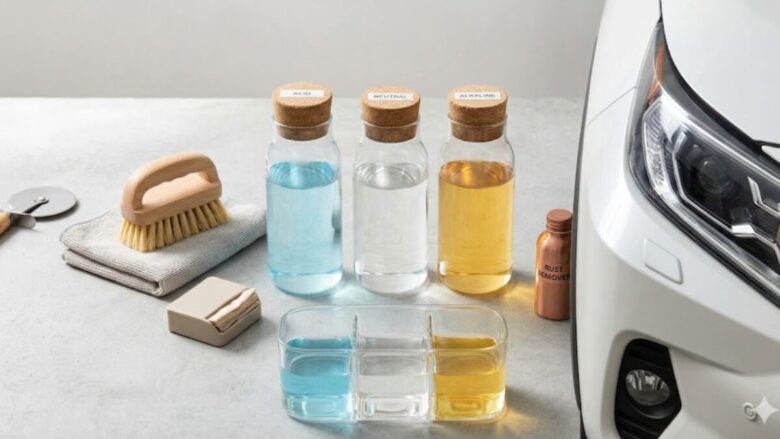
- pH 0 to 6 (Acidic): Specialized products focused on removing minerals, rust, limescale, and inorganic dirt.
- pH 7 (Neutral): Safe solutions for any surface, designed to remove daily light grease and grime.
- pH 8 to 14 (Alkaline): Heavy-duty formulas engineered to break down organic matter, oils, waxes, and grease.
🧪 [Click here to check the best pH test strips and meters on Amazon]
When to Use Acidic Cleaners?
Cleaning products with acidic characteristics are true specialists in eliminating mineral-based dirt, also known as inorganic dirt. These contaminants do not contain organic fats; instead, they are accumulations of solid particles.
If you notice whitish stains, hardened crusts, or signs of oxidation, your cabinet needs an acidic agent.
Main practical applications of acidic pH:
- Post-construction cleaning to remove cement, mortar, and plaster splashes.
- Removing rust stains from floors or metal surfaces.
- Eliminating hard water marks (limescale) buildup on bathroom glass shower doors.
- Deep cleaning the inside of toilet bowls to remove uric scale and mineral crusts.
Safety Warning: Never apply acidic products to acid-sensitive natural stones like marble and limestone. The acid reacts with these materials, causing physical corrosion (etching) and dull stains that are impossible to remove without professional polishing.
The Cabinet Wildcard: pH-Neutral Cleaners
A neutral cleaner has its pH locked exactly at number 7. This means it is non-aggressive and carries the highest level of chemical safety on the market. Its main function is to clean through the physical action of its surfactants, which trap dirt and wash it away with water. Classic liquid dish soap is a perfect example of a household neutral wildcard.
If you are ever in doubt about a surface material or if it is extremely sensitive, the golden rule of DIY is to always start with a pH-neutral product.
🧽 [Click here to check the best professional neutral detergents on Amazon]
Main practical applications of neutral pH:
- Daily washing of dishes, pots, and kitchen utensils (using standard dish soap).
- Daily maintenance of delicate floors, such as glossy porcelain, laminates, and vinyl.
- Cleaning sensitive upholstery and fabrics that easily lose or fade their original color.
- Wiping down electronic screens and standard glass surfaces.
Because it does not chemically react to change the structure of the surface, a neutral cleaner removes surface grime while preserving the original shine.
When the Job Gets Heavy: Alkaline Detergents and Degreasers
Alkaline products work ruthlessly against organic matter. They perform a chemical process called saponification, turning heavy oils, fats, and grease into water-soluble substances for easy rinsing.
When dirt sticks in a way that feels impossible to scrub off, it is usually because it is organic and requires a high pH.
Main practical applications of alkaline pH:
- Kitchen degreasers to clean stoves, range hoods, and baked-on ovens.
- Heavy-duty cleaning of BBQ grills caked with burnt grease.
- Stripping old wax buildup from the corners of hardwood or slate floors.
- Deep cleaning carpets, mattresses, and couches stained by sweat or body oils.
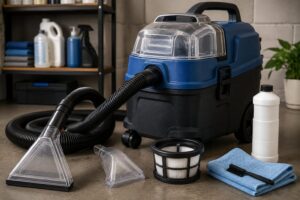
If you use equipment like high-pressure extractors to clean upholstery, using an alkaline traffic lane cleaner or pre-spray is essential to loosen the dirt from the fabric fibers before applying suction.
Quick Reference List: Dirt vs. Ideal pH
To make your next cleanup easier, check this quick list to choose the right product for each problem:
- Cooking grease: Alkaline pH (Degreaser)
- Cement and grout residue: Acidic pH (Post-construction cleaner)
- Daily dust on porcelain tile: Neutral pH (Neutral cleaner)
- Rust on tools: Acidic pH (Rust remover)
- Motor oil on the garage floor: Alkaline pH (Heavy-duty degreaser)
- Sweat stains on a mattress: Alkaline pH (Upholstery pre-spray)
Conclusion
Decoding cleaning products pH is not a task exclusive to scientists; it is an indispensable tool for smart housekeeping. Understanding how this scale works protects your home’s surfaces from permanent damage, saves you money on the wrong products, and saves your time scrubbing what could be removed with ease.
The next time you face a heavy cleanup or buy a new cleaning item, stop for a second and check the product label for its pH properties.
Now we want to hear from you: Have you ever made the mistake of ruining a piece of furniture or a floor by using the wrong pH product? Share your story in the comments below and let us know your questions!