You probably change your sheets regularly, wash your pillowcases, and keep your bedroom well-ventilated. But when was the last time you looked at what is hidden beneath the protective surface of your bedding? The real danger to your night’s sleep isn’t the dirt you can see, but rather the impact of invisible dust on foam core layers inside your mattress. This silent accumulation acts directly on the material’s internal structure, destroying your comfort and your health without you even noticing.
In this article, you will understand how this microscopic debris behaves, the exact reason why it causes your bed to sag prematurely, and a practical guide to fixing the problem in just a few minutes.
Disclaimer: As an Amazon Associate, FixByMyself earns from qualifying purchases made through links in this post at no additional cost to you.
The Silent Enemy: What Is Invisible Dust?
When we think of dust, a gray layer settling on furniture usually comes to mind. However, the dust that penetrates deep into your mattress fibers is much more complex and aggressive. It consists of a cocktail of microscopic particles that we shed and track in every single night.
- Dead skin cells: We naturally shed millions of skin cells every night while sleeping, providing an endless food source for dust mites.
- Microscopic pollution: Fine soot, outdoor pollen, and dust particles that blow in through open windows and settle into fabrics.
- Invisible mold spores: Airborne particles that find the perfect breeding ground when mixed with body heat and sweat.
All of this debris easily bypasses standard sheets, migrating straight into the open pores of the foam core. Merely shaking out your sheets won’t remove the deep-seated dust and dander trapped inside the foam. To eliminate dust mites, dead skin cells, and microscopic allergens, you need a high-suction vacuum equipped with a HEPA filter. Protect your family’s sleep quality with the right gear.
➡️ [Shop the Best HEPA Mattress Vacuums on Amazon]
How Invisible Dust Destroys Your Foam Mattress
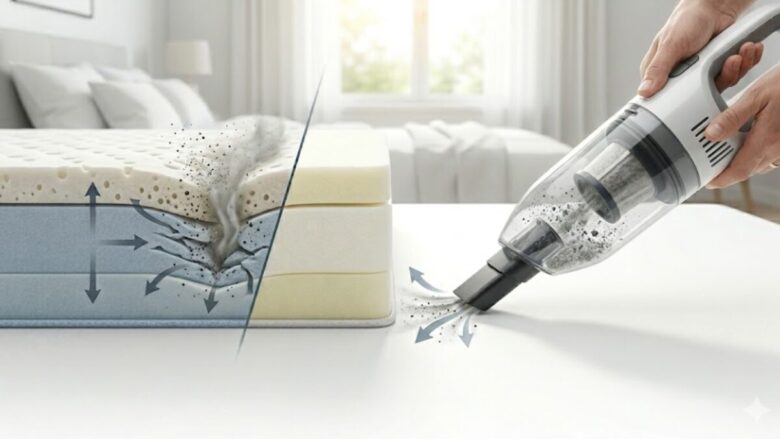
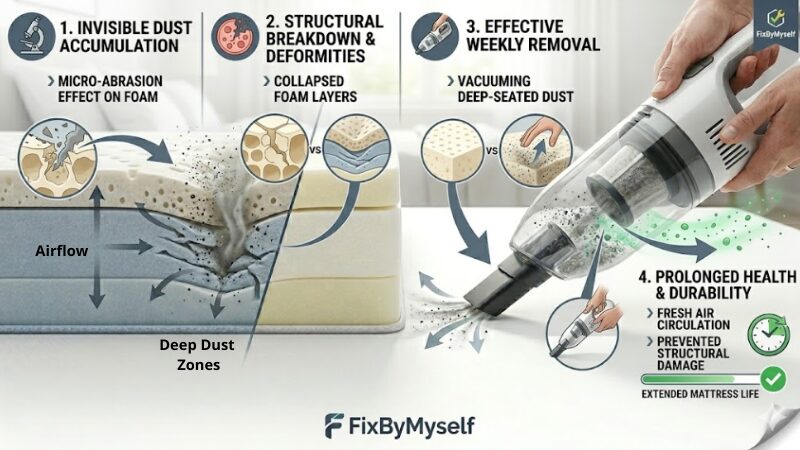
What most homeowners don’t realize is that this issue goes far beyond basic hygiene. There is a real mechanical wear and tear caused by these microscopic particles. Invisible dust acts like microscopic sandpaper inside the foam block.
Every time you lay down, shift positions, or sit on the edge of the bed, your body weight exerts pressure on the mattress structure. This pressure grinds the polyurethane or memory foam cells directly against the sharp microcrystals of trapped dirt. Over time, this constant friction breaks down the cellular walls of the foam, causing it to lose its resiliency, start sagging, and develop permanent, uncomfortable dips.
Why Weekly Vacuuming Is Non-Negotiable
Establishing a habit of vacuuming your bed once a week is the only effective way to break this cycle of deterioration. The benefits of this routine fall into three major pillars:
- Extended lifespan: Removing abrasive particles prevents cellular breakdown within the foam, protecting your financial investment for years to come.
- Respiratory health: High-efficiency suction eliminates dust mites, dander, and their waste, drastically reducing nighttime stuffiness, asthma flares, and morning allergies.
- Financial savings: Retaining the original density of the foam core prevents morning back pain and eliminates the need to replace an expensive mattress prematurely.
➡️ [View Top-Rated Mattress Vacuums with Discounts on Amazon]
Step-by-Step Guide to Vacuuming Your Mattress Correctly
To ensure your cleaning routine extracts deep-seated particles without causing friction damage to the mattress ticking, follow this straightforward method:
- Strip the bed entirely: Remove all sheets, mattress protectors, and encasements, leaving the raw fabric surface fully exposed.
- Use the correct attachment: Attach your vacuum’s upholstery tool (preferably one with soft bristles to avoid pilling or snagging the fabric).
- Apply overlapping strokes: Move the vacuum slowly across the surface in a grid pattern—first horizontally, then vertically—applying firm, steady pressure.
- Pay attention to details: Spend extra time on the seams, tufts, quilting lines, and edges, where invisible dust settles heaviest.
- Let it breathe: If possible, leave the mattress bare for about an hour after vacuuming to allow fresh air to circulate freely through the freshly cleared foam pores.
Protecting Your Investment for the Long Haul
Adopting a deep weekly vacuuming routine is an essential step for anyone looking to bridge home economics with personal wellness. Understanding the invisible degradation taking place underneath your sheets changes the way you maintain your home. Ensuring the internal structure remains free of abrasive debris preserves proper spinal alignment, improves bedroom air quality, and safeguards your wallet from early replacement costs—turning a simple chore into years of flawless, restful sleep.