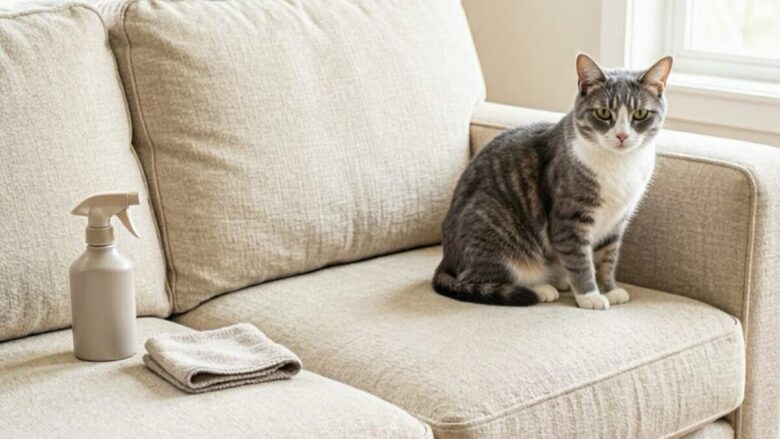
Anyone who owns cats knows they are extraordinary companions—clean, hygienic, and full of personality. However, when a small mishap occurs and they urinate outside the litter box, the problem can become a true domestic nightmare. The odor of cat urine is one of the most intense, persistent, and difficult to combat in interior cleaning.
This challenge reaches even greater proportions when the target is a sofa, armchair, or mattress with dense layers of foam. If you are facing this problem in your home, this is the ultimate guide to eliminate chronic cat urine smell from thick upholstery without damaging your furniture’s fabric.
Many people try to resolve the situation with homemade recipes or standard cleaning products, only to notice that the foul odor always returns on hotter or more humid days. Understanding the root of the problem is the first step to rescuing the comfort of your environment for good.
Disclaimer: As an Amazon Associate, FixByMyself earns from qualifying purchases made through links in this post at no additional cost to you.
Why Does Cat Urine Odor Become Chronic?
To combat the problem effectively, you need to understand the science behind it. Cat urine is composed of urea, bacteria, and, most importantly, uric acid. While urea and bacteria are easily removed with standard soap and water, uric acid does not dissolve in water and remains embedded within the fibers.
The big villain in the case of thick upholstery is gravity. When a cat urinates on a thick cushion, the liquid penetrates rapidly through the surface layers and settles deep within the center of the foam.
Traditional cleaning products only clean the surface of the fabric. Over time, the uric acid trapped in the deep layers comes into contact with natural moisture in the air, reactivating the odor crystals. This is why the smell seems to disappear only to bother you again days later.
The Ultimate Method for Deep-Layer Elimination
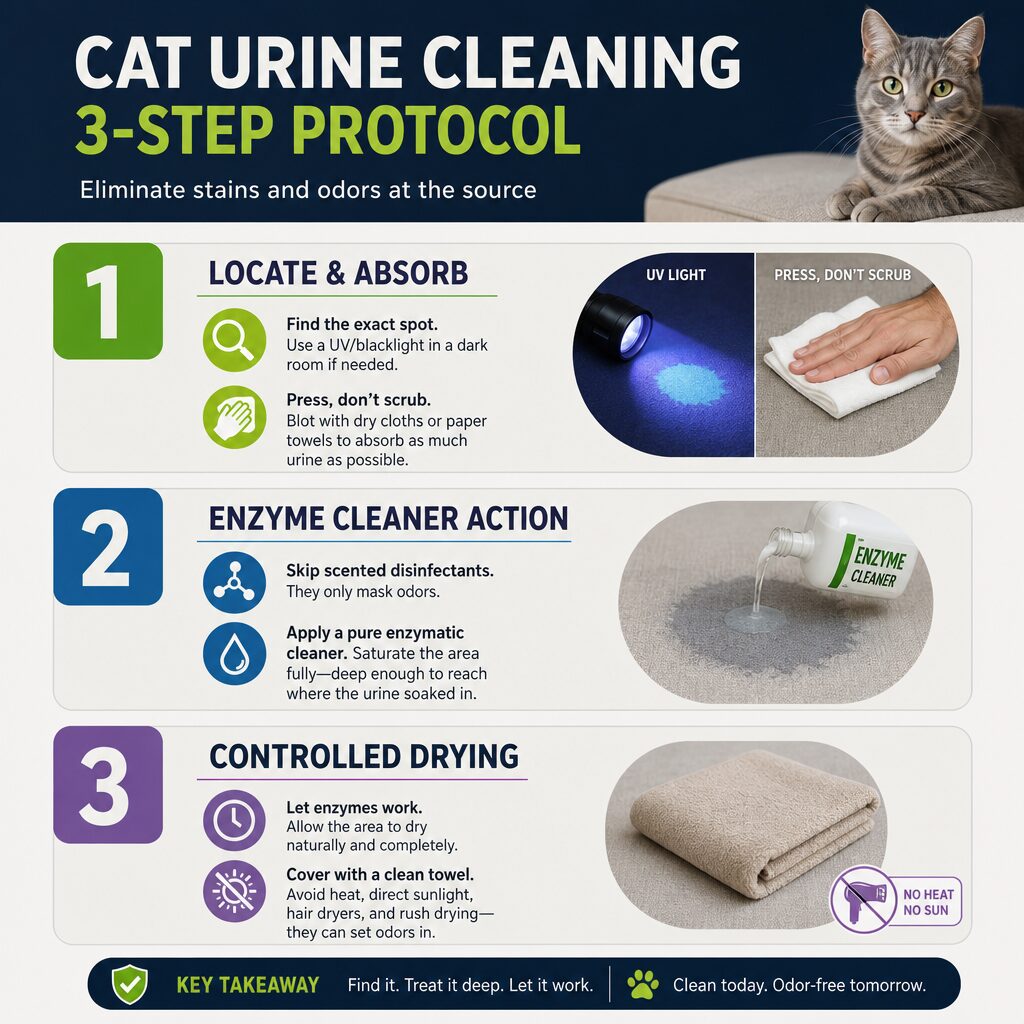
To eliminate this reservoir of foul odor hidden inside the foam, the treatment must be precise, patient, and applied in layers. Carefully follow the three essential steps below.
Step 1: Location and Initial Absorption
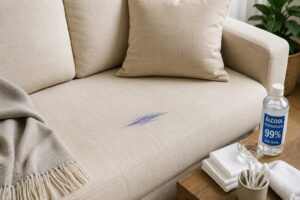
If the stain is fresh, press the area immediately with dry cloths or several layers of paper towels to absorb as much liquid as possible. Take note: never scrub the area, as friction spreads the urine sideways, increasing the affected area.
If the odor is old and you cannot visually identify where the cat urinated, use a blacklight (UV) flashlight in a darkened room. Cat urine glows under ultraviolet light, allowing you to map out with surgical precision the exact spots that need treatment.
🔦 [Click here to check this UV blacklight flashlight to find urine stains]
Step 2: The Power of Enzyme Cleaners
Forget scented disinfectants, as they only mask the smell temporarily. The only real way to destroy uric acid crystals is by using an enzyme cleaner specifically designed for pet urine. Enzymes break down the odor molecules, turning them into neutral elements.
For thick upholstery, use the saturation technique: pour the pure enzymatic product directly over the stain. The amount must be generous enough to mimic the flow of the urine, ensuring that the liquid sinks and reaches the exact same depth in the foam where the pee is lodged.
🐱 [Click here to check the best enzymatic cat urine odor eliminators on Amazon]
Step 3: The Controlled Drying Process
After thoroughly dampening the area with the enzymatic product, do not attempt to dry it immediately. The enzymes need time to work while the product evaporates naturally.
Place a clean towel over the spot to protect it from dust and let it dry in the shade. Avoid speeding up the process with hair dryers or direct exposure to strong sunlight, as excessive heat can set the odor residues into the fabric fibers before the enzymes complete their work.
Comparison Table: What Works vs. What Makes the Smell Worse
Knowing what to avoid is just as important as knowing what to apply. See the practical comparison below before choosing your strategy:
| Product / Method | Effectiveness on Thick Upholstery | What Actually Happens |
| Enzyme Cleaner | High (Highly Recommended) | Chemically breaks down uric acid at the core of the foam. |
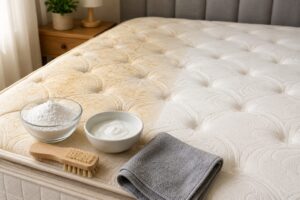
| Vinegar and Baking Soda | Medium / Low | Only Glass-cleans surface odor; does not reach the bottom of the foam. |
| Ammonia-Based Products | Zero (Highly Dangerous) | Ammonia smells like urine itself, stimulating the cat to urinate in the same spot again. |
How to Prevent Your Cat from Urinating in the Same Spot Again
Cats possess an extremely sharp sense of smell. If they can sniff out the slightest trace of their own urine on a piece of furniture, they will understand that spot to be an extension of their territory and will return to use it as a bathroom.
Because of this, completely eliminating the odor with enzymes is the best way to break this marking cycle. Once cleaned, you can apply natural scent repellents that displease the animal’s sense of smell, such as a well-diluted solution of citrus extracts or lavender essential oil near the furniture.
Additionally, always assess your companion’s well-being. Sudden changes in urinary behavior can indicate dirty litter boxes, stress from routine changes, or health issues like urinary tract infections (UTIs). If the behavior persists, a consultation with a veterinarian is indispensable.
The Bottom Line
Saving a beloved piece of furniture requires patience and applying the right products in the right place. By acting directly at the root of the problem—which lies deep within the foam—you avoid discarding the upholstery prematurely and save money on expensive repairs or unnecessary replacements.
With consistency and enzyme technology, it is perfectly possible to maintain a harmonious coexistence with your cat in a clean, fresh, and welcoming home.
Now we want to hear from you: Have you ever gone through this problem with your pet? Which technique worked out in your cleaning routine? Leave your story in the comments below and share your questions with us!